
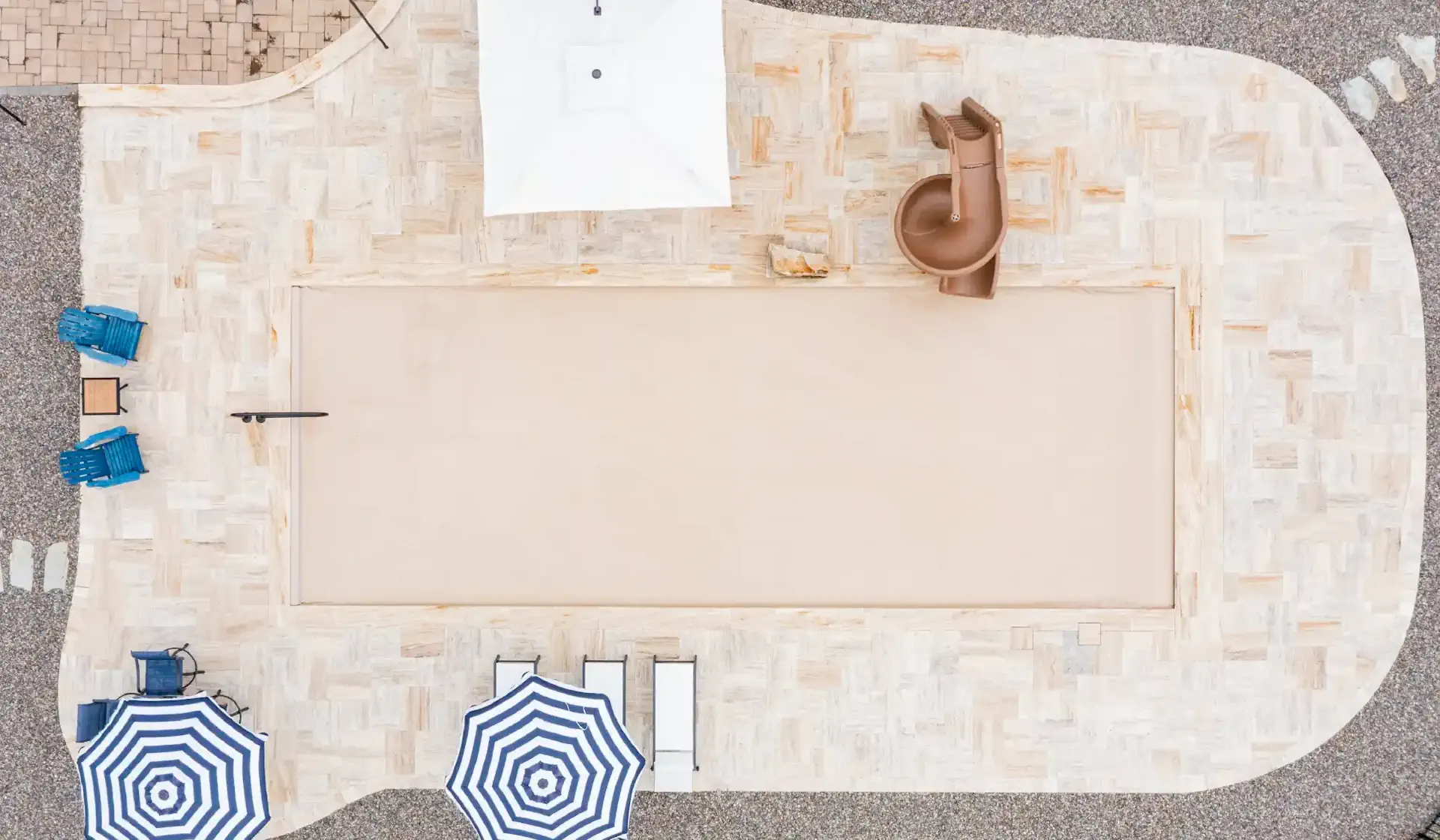
A pool cover does a lot of quiet work. It keeps leaves and dirt out of the water, holds in heat, cuts down on chemical use and, most importantly, helps keep kids and pets safe. That’s why picking one deserves more thought than grabbing the first option you find online.
At Integra Pool Covers, we’ve helped pool owners sort through these decisions for years. Here are the questions we think every homeowner should ask before buying a pool cover.
What Type of Pool Cover Do You Need?
Start with the big picture. Pool covers fall into a few main categories, and each one is built for a different job.
Automatic pool covers open and close with the turn of a key or the push of a button. They’re the most convenient option for everyday use and give you strong protection and a cleaner pool all season long.
Safety covers are designed to keep children and pets from falling into the water. They come in mesh and solid versions and are often used to close the pool for the off-season.
Solar covers use the sun’s energy to warm the water and slow evaporation. They’re great for stretching your swim season, but they are not safety devices.
Winter covers are heavy-duty covers made to protect the pool through harsh weather while it’s closed.
Before you shop, ask yourself what matters most. Do you want a longer swim season, lower maintenance costs, better safety or all three? Your answer will narrow the field quickly.
How Do You Measure Your Pool for a Cover That Fits?
A cover that doesn’t fit won’t do its job. Gaps let debris in, and a poor fit can create real safety risks or damage your equipment.
You’ll need your pool’s exact length, width and shape. Freeform and irregularly shaped pools usually call for a professional measurement. Be sure to account for steps, benches, spas, raised walls and water features, since all of these affect how a cover is designed and installed.
How Much Should You Budget for a Pool Cover?
Pool cover prices range widely, from simple solar covers to fully automatic safety systems. It’s natural to lean toward the lowest price, but the upfront cost is only part of the story.
A well-built cover can pay you back over time through lower heating bills, less chemical use, reduced evaporation and fewer replacements. A cheap, low-quality cover can do the opposite, leading to water chemistry problems and safety gaps you don’t want to find out about the hard way. When it comes to protecting the people you love, quality is worth it.
As you set your budget, include installation (especially for automatic covers), replacement parts, cleaning supplies and any repairs down the road.
Automatic vs. Manual Pool Covers: Which Is Easier to Use?
Think honestly about who will be opening and closing the cover and how often. Manual covers take physical effort and need a place to be stored when the pool is open. If the cover is a hassle, it’s more likely to stay off the pool, which defeats the purpose.
Automatic covers remove that barrier. Covering the pool becomes part of your routine instead of a chore, so the pool stays protected more of the time.
Does the Pool Cover Meet ASTM Safety Standards?
If you have children, grandchildren or pets, safety should top your list. Look for a cover that meets ASTM F1346, the standard for safety covers in the United States. A compliant cover is built to support the weight of a person and to block access to the water when properly installed.
Ask about locks, anchor points and installation requirements too. And keep in mind that not every cover is a safety cover. Some are made only to block debris or hold in heat, so always confirm what a cover is rated for before you buy.
How Long Does a Pool Cover Last?
Knowing a cover’s expected lifespan helps you understand its true cost. Depending on the material, your climate and how often you use it, a quality cover typically lasts anywhere from 5 to 15 years.
Ask what the warranty covers, including both materials and workmanship. If your pool gets a lot of direct sun, look for UV-resistant, fade-resistant fabrics that hold up to heat and weather year after year.
Do Pool Covers Require Professional Installation?
Some covers can be put on by homeowners. Others, especially automatic covers, need trained technicians to install them correctly and keep the safety features working as designed.
Ask about installation costs and whether a DIY install would affect your warranty. Professional installation may add to the initial price, but it helps ensure your cover works safely, meets ASTM standards and avoids costly mistakes.
What Maintenance Does a Pool Cover Need?
Every cover needs some care to perform well and last as long as it should. Ask about cleaning, seasonal storage and any special instructions for the type you choose.
Some covers need regular cleaning to prevent mold and mildew. Others need occasional checks on hardware, tracks or moving parts. Knowing what’s involved upfront helps you plan for both the time and the cost.
Choose the Right Pool Cover with Integra Pool Covers
The right pool cover protects your investment, your time and your family. When you ask these questions before buying, you’ll be ready to choose a cover that fits your pool, your budget and the way you live.
Remember that the cheapest option isn’t always the best value. Focus on quality, safety and the features that matter most to you, and you’ll enjoy the results for many swim seasons to come.
Ready to find the right fit? Connect with Integra Pool Covers today to learn more about our pool cover solutions and how we can help protect your pool.

